Travel Story: “Old and New” in Cody, Wyoming
Hiker, Writer, Traveler, Recovering Person
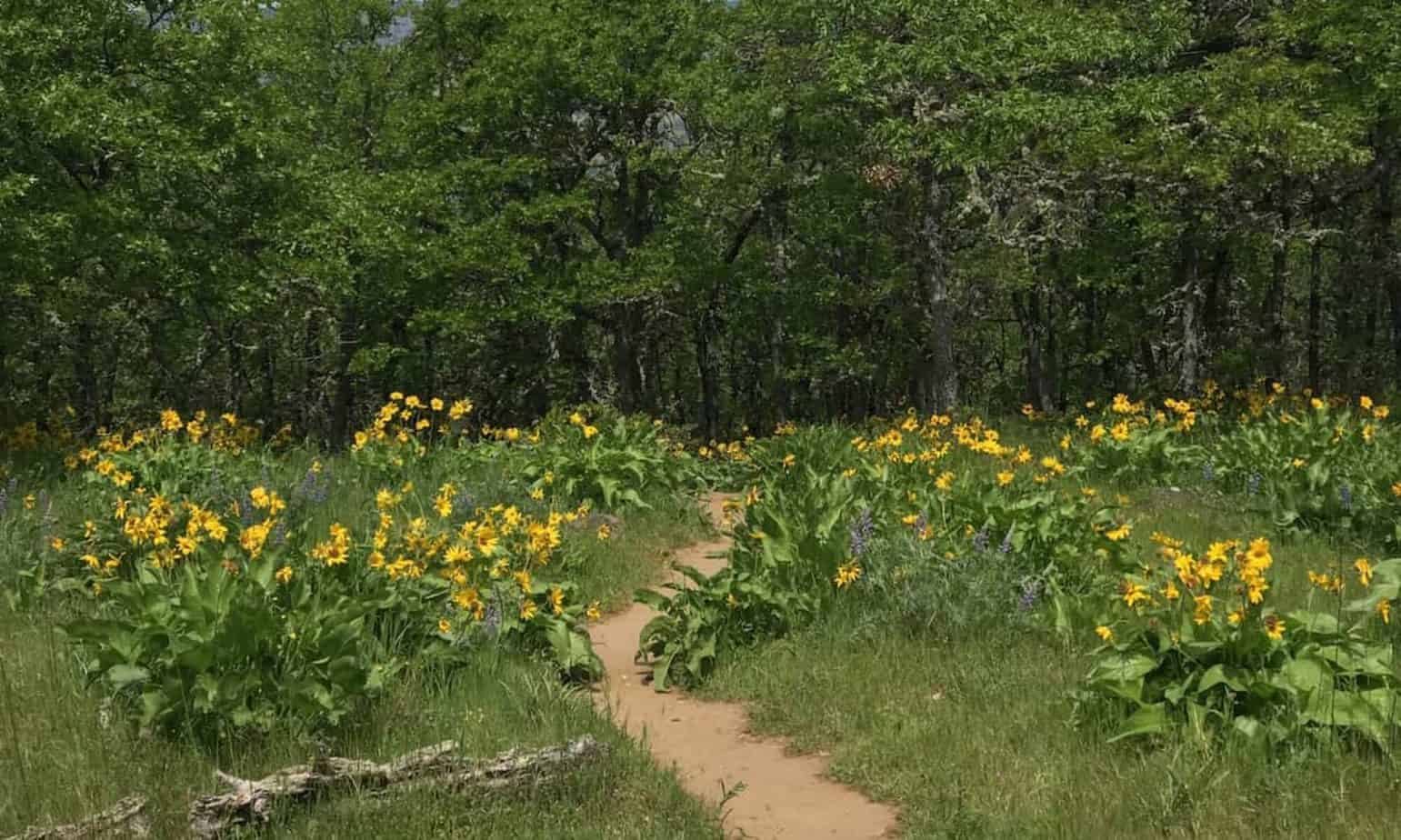
Every year about this time, one of the most popular hikes around is to the top of Dog Mountain. That’s because the whole top of the mountain is a big meadow covered in wildflowers, the most conspicuous being balsamroot:

Now, imagine about a million of those blooming all at one, 3,000 feet above the Columbia River. That’s Dog Mountain at peak wildflower bloom.
In fact, you don’t have to imagine it at all. Here’s a shot from a few years back:

And that wasn’t even at peak bloom!
Well, it’s getting time for Dog Mountain in 2012. According to this report on PortlandHikers.org (thanks, TrailMom!), the summit meadows are about two weeks away, but the action is going strong on the way up.
So get your legs ready; it’s getting to be time for the wildflower show on Dog Mountain.
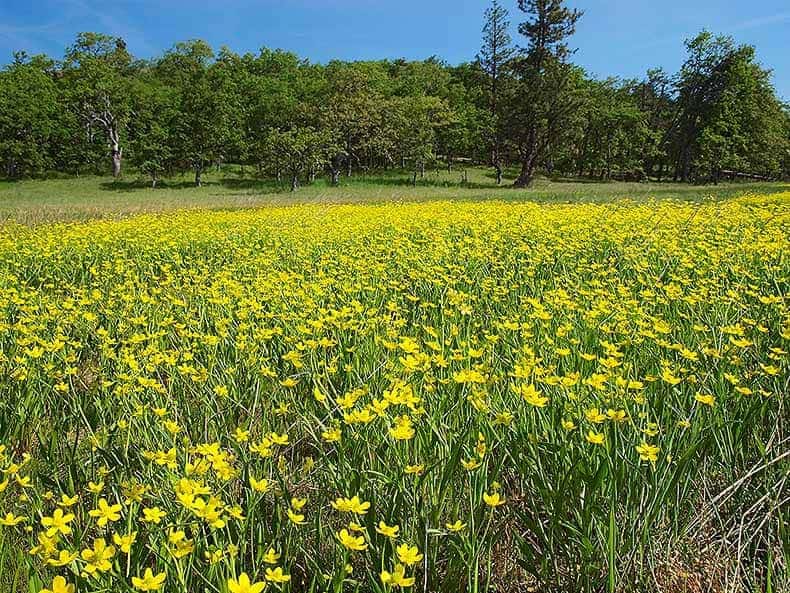
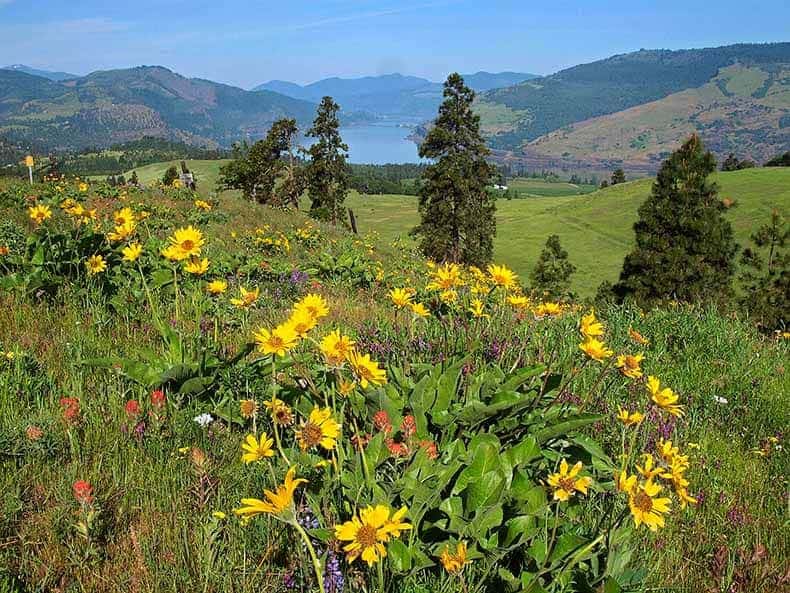
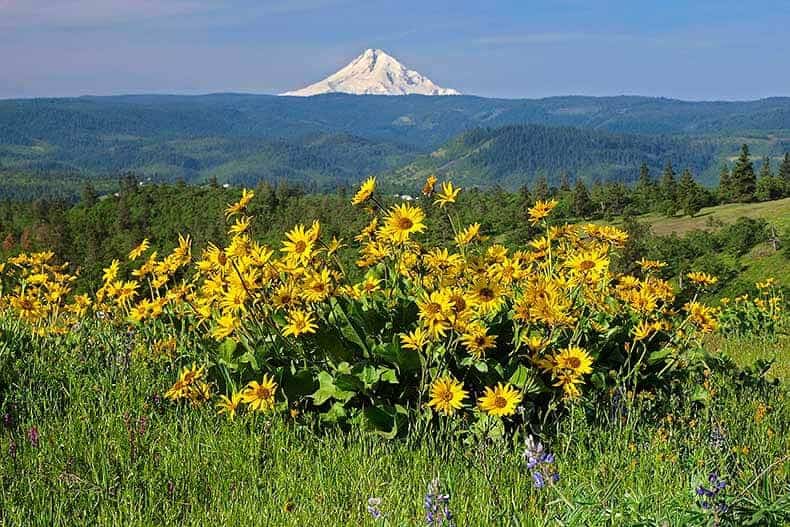
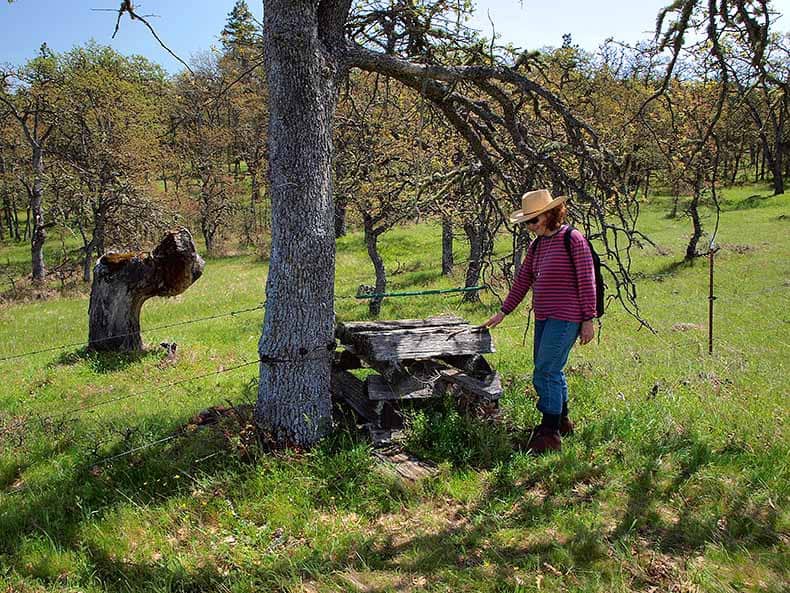
Many thanks to Darryl Lloyd of Long Shadow Photography for these amazing photos from Memaloose State Park. It is getting towards the end of wildflower season in the Columbia River Gorge, so let’s get on out there and see what there is to see!
Take it away, Darryl:
To Columbia Gorge hikers and wildflower lovers,
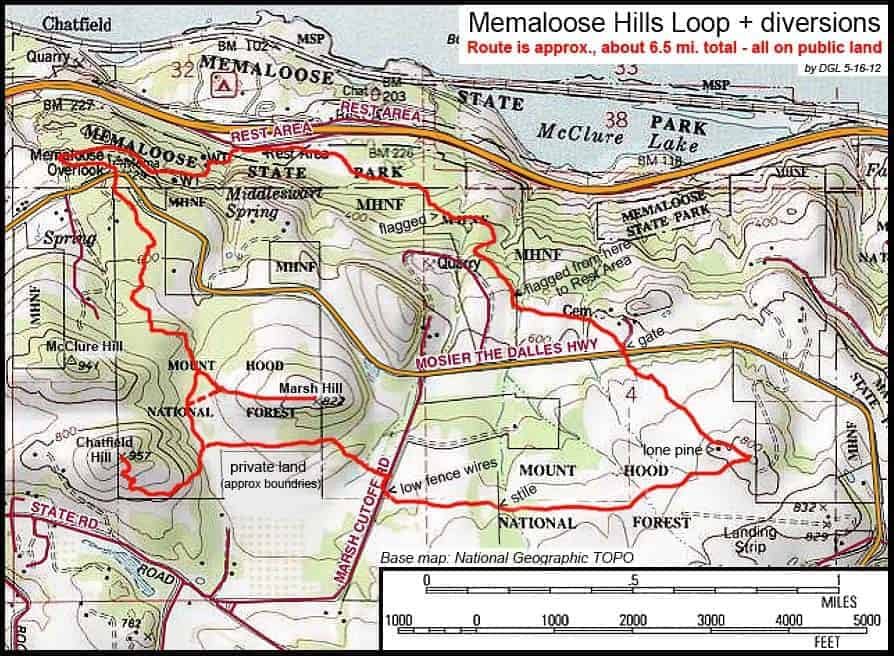
The wonderful Memaloose Hills Loop “trail” was first scouted by naturalist, Russ Jolley many years ago. It’s known as one of the best wildflower hikes in the Columbia Gorge. Paul Slichter listed 128 species on a late-April field trip in 2009.
The unmarked trail is unofficial and few people know the route beyond the western part. There seems to be no map of it online, so I’ve undertaken the task with this draft. Since I didn’t use a GPS device, the route sketched in red is approximate. The total distance is about 6.5 miles, and you’ll be on public land all the way.
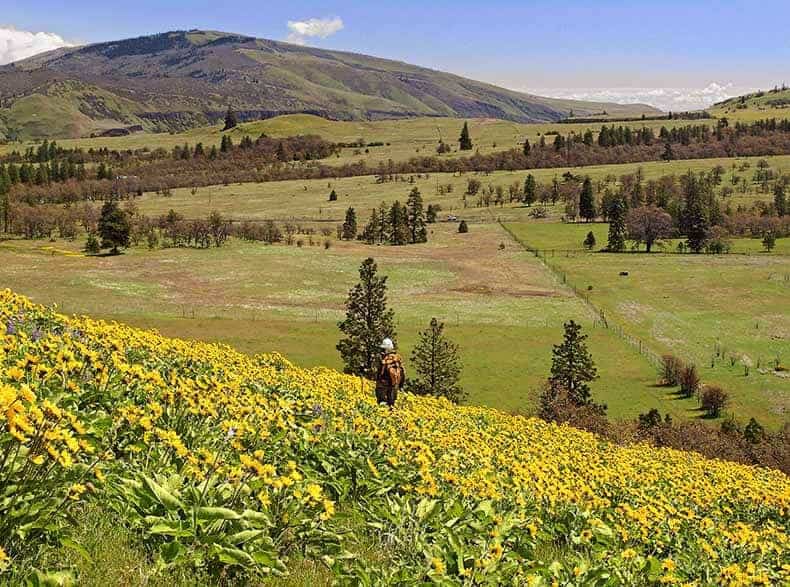
Below the map are some photos that I’ve taken over the years. There’s still a large number of flower species in bloom, but balsamroot is waning over most of the area.
Darryl

Kurt,
Listened to shows 149-151 tonight, and wanted to say thanks. You got right into my head and shone a positive light in there.
What I really connected with was the idea of how a simple life is so much better than what I used to do, and how practicing self-love sometimes just means being comfortable with myself, and recognizing with gratitude the progress I’ve made.
Funny how a subtle shift of focus and emphasis turns “bad” into “good” or just “as is.”
“My meditations lately have been really scattered” turns into “Hey, I meditate every day, even when it doesn’t seem magical.”
“I can’t keep up with all this work” turns into, with a few breaths, “I have some amazing work I get to do, and I’m the one who chose it, which means I can change it.”
“I am not as good at shamanic journeying as the other people in my group” is just a negativized version of “I am new at this amazing practice and surrounded by skilled teachers.”
“I am having such a nice Saturday evening at home, relaxing, cooking and enjoying a nice meal” is so much better than “I am alone on Saturday night, and that makes me sad.”
“What the hell is gonna happen on this MA hike tomorrow? Will everybody have a good time? Am I going to screw something up?” How about “I’m going hiking tomorrow with 10 recovery friends! And yeah, I sent the email, but I’m not in charge!”
Thanks, Kurt, for reminding me of the progress I’ve made, and how much closer I am to myself than ever before. And now I, too, shall go for a walk and to bed early.
Paul
A friend who might be getting a book deal asked me about “the numbers,” and here’s my response. This is to explain why, even with four books in print right now, I drive a 20-year-old car and live in a tiny studio, from which I work at two jobs.
—–
Good to hear from you, and congrats on your upcoming book journey.
The numbers are somewhere between hard to figure and pretty standard, if that makes sense. In other words, there seems to be a typical range, and variations within that range are small to the world of publishing but seem big to writers and publishers.
In other words, between what I have gotten and heard about, advances on first editions may run from $3,000 to $6,000, if anything less, and royalties around 10-15% of the publisher’s net. And, if it’s not apparent, an advance is against those royalties. Also, if it’s not clear, the publisher’s net is roughly 50% of the cover price, so 10% of net is 5% of cover price. When they sell an $18 book, you make 90 cents.
So it kind of goes like this: you get $3,000 and feel rich. Then you work your ass off and create a book that means the world to you. It comes out, and you get to go over to Powells, buy a latte, and see your book on the shelf. This is really cool. Then, in the first year, your publisher sells maybe 2,000 copies at $15 per, “earning” you something like $1,500. You don’t see this, of course, because of the advance. The next year they sell another 1,000, and you’ve “made” $750. If you’re lucky, the book does well, you got a good rate and/or the advance was small, you might see another check two or three years after the book comes out, which is typically a year after you do all the work.
So, bottom line:
If you’re smart you will not treat this as a way to get wealthy, and you will never, ever consider what your hourly rate of pay is.
This is why am moving towards publishing my own books!
Here is something from my book, Peaceful Places: Portland — which you can get a signed copy of at the link.
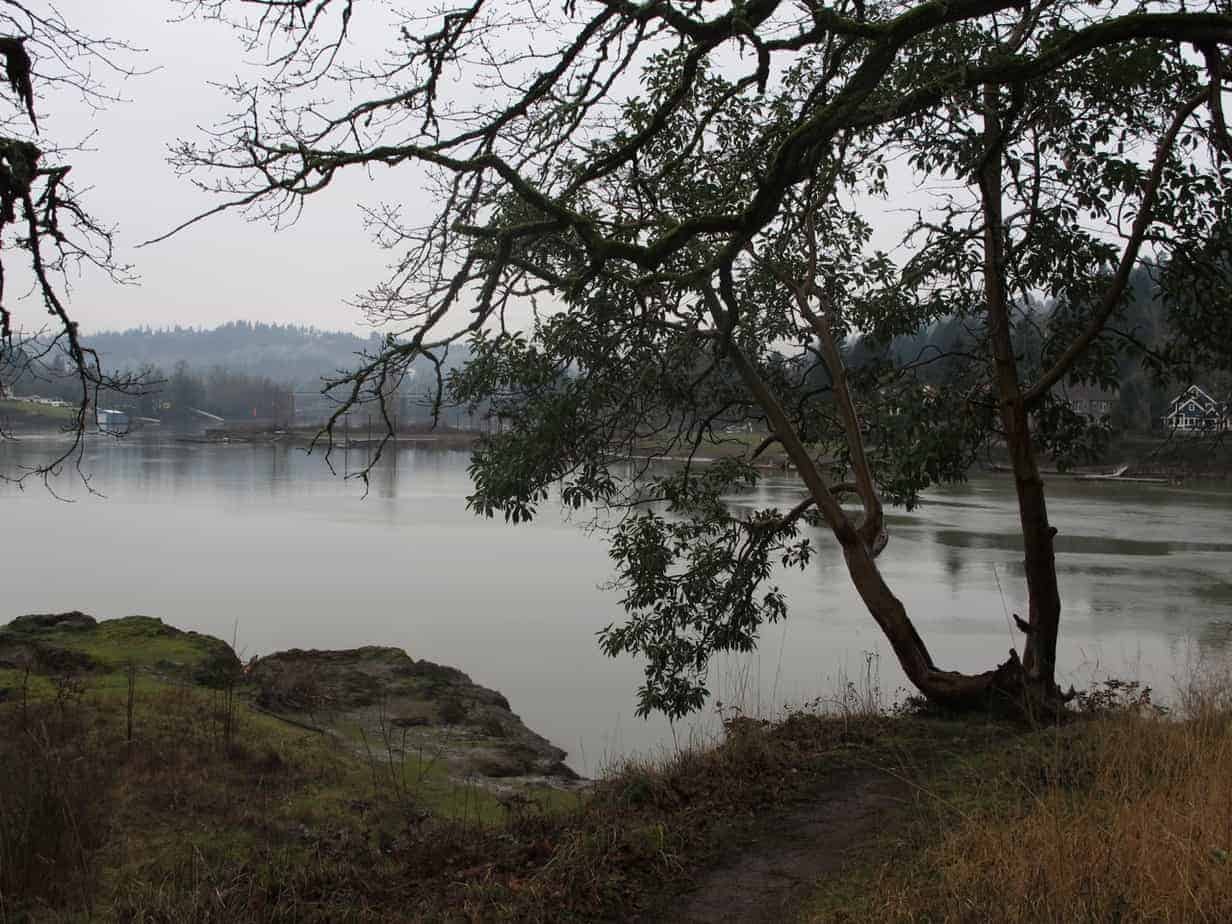
It can be easy, when living in Portland, to forget that the Willamette is a river.
I know that sounds odd, because what else would it be, but how often do you look at that body of water downtown and think about currents, and drainages, and riverbanks, and islands? It just seems kind of like some water to get across on the way to work, right?

Well, it’s a river, and if you want to get just a little glimpse of it in that form, head out to Elk Rock Island. First you have to find tiny Spring Park in Milwaukie. It’s a nice enough place, but follow the trail into the woods. Yes, you’re headed for the riverbank. And when you get there, if the water is low enough, you can walk right out there to the island-m-across a land bridge that is thought to be 40 million years old.
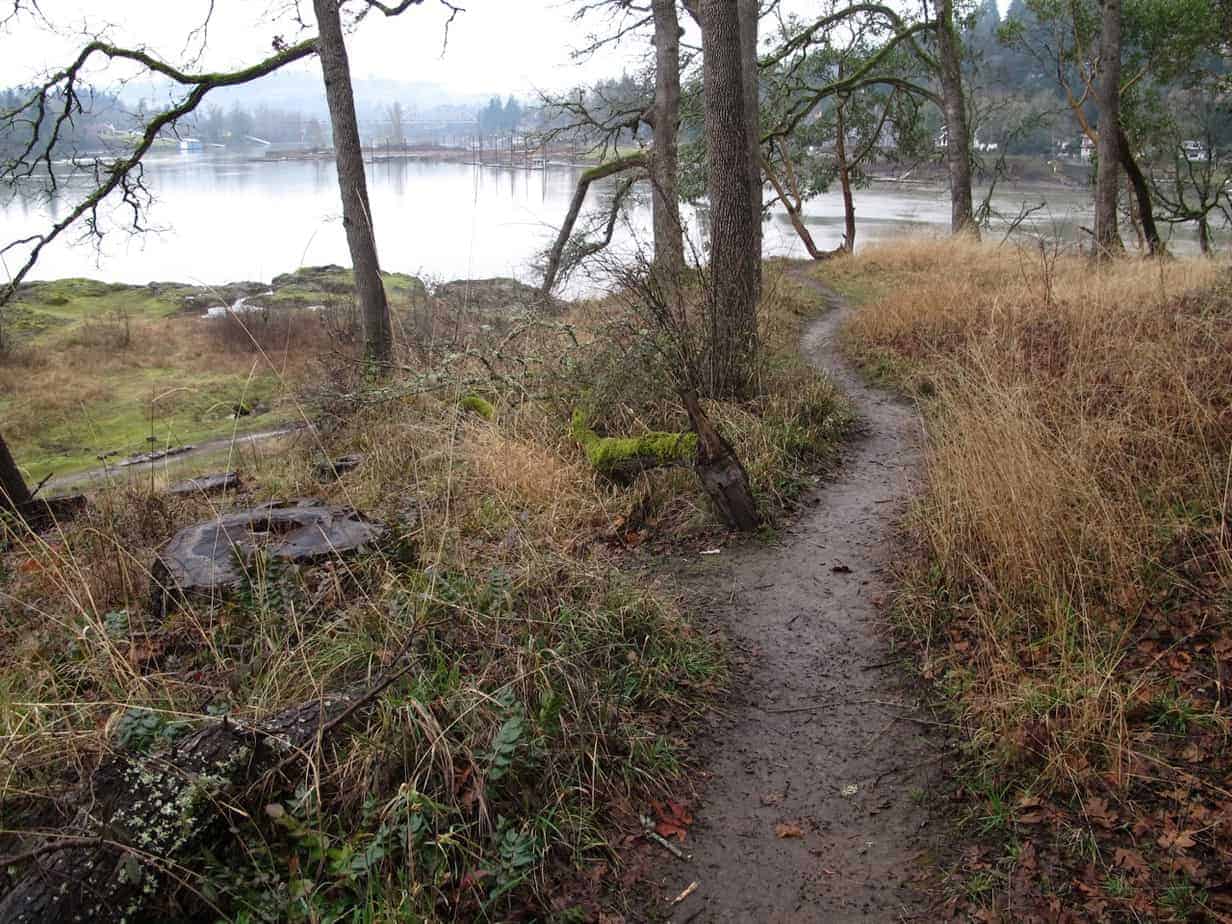
See, we’re not just “in town” anymore, are we?
This little island had many owners before 1910 (one of them even built a dance hall on it) before its last private owner, a Scottish grain exporter named Peter Kerr donated it to the city with one stipulation: “Preserve it as a pretty place for all to enjoy.” Mission accomplished.
Here, within sight of homes and docks and industry, is a patch of woodlands, a small beach, a rocky bench, a cliff face, and a hidden laggon. Here are hiking trails and picnic spots, some peace and quiet, and — in winter, anyway — a waterfall across the way!
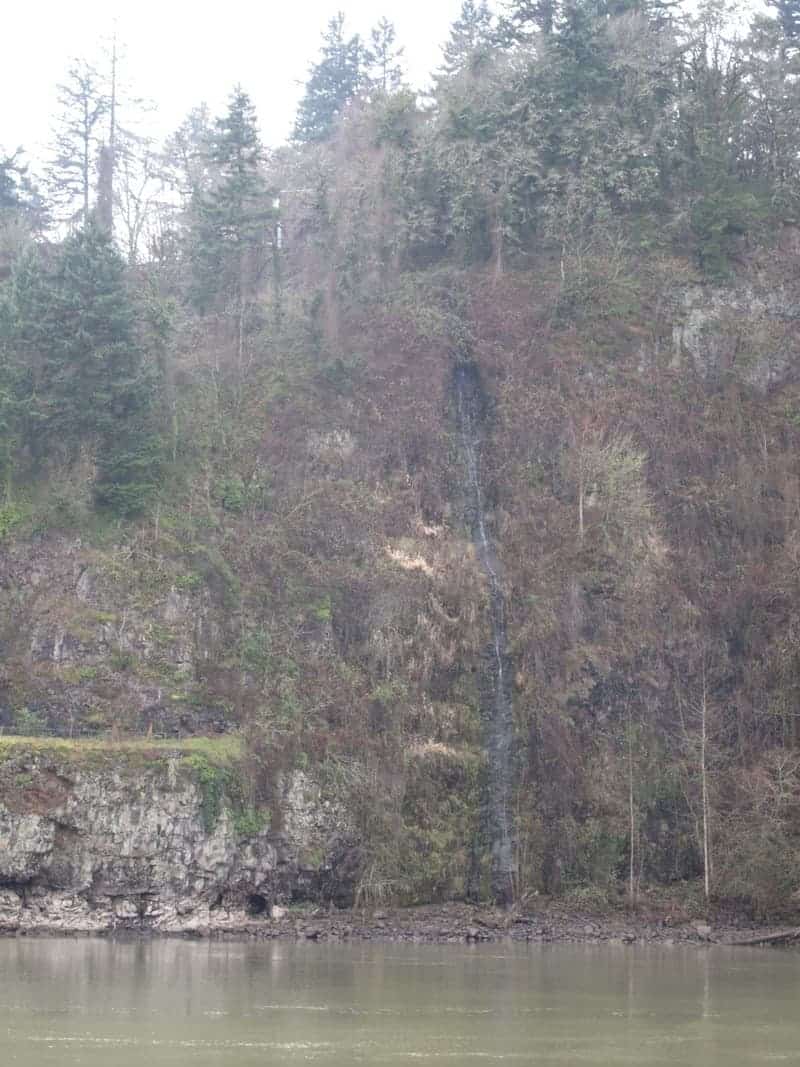
And here, rolling along as it always has, is a river, with a gentle current and birds bobbing and swooping, and, yes, an island in the middle of it.
Where: SE 19th Avenue & SE Sparrow Street,Milwaukie
When: Sunrise to sunset, but generally not accessible due to high water in winter and spring
Web: Official site
I really kind of hate that question. It’s nice that people ask, I suppose, but it cannot be answered, and really, they don’t want you to. All this was on my mind when I wrote this piece for the Memphis Flyer.
If you’ve ever gone on a trip, you’ve heard the Question.
Let’s say you go down to the Caribbean, stay in a quiet little resort with its own beach, charter a boat for a day, go snorkeling, cook a fresh fish dinner in the bungalow, and walk on the beach in the moonlight. And let’s say that was one night in a week of such nights.
After this transformative experience, during which every day was a new adventure filled with interesting experiences, you return home to see your friends and family. And what do they say?
“How was your trip?”